

A machine-checked comparison
SiPhox is the most affordable, lowest pain and most time efficient blood test that goes beyond routine labs and ships your sample cold.
Unless you live in New York or Hawaii, where SiPhox does not ship. Count the price, your time, the drive and the needle, and a SiPhox EasyDraw kit costs less than Function, Superpower, Oura, Apple + Quest, WHOOP Comprehensive and Everlywell 360. It also hurts less and takes less time than all of them: an upper-arm collector instead of a venous draw, done at home instead of at a lab. WHOOP’s basic panel and Rythm cost less, and both fall outside the claim: one covers only routine labs, the other ships samples at uncontrolled temperature.
This note was researched and written by Claude, Anthropic’s AI model: Claude Fable 5.2 and Claude Opus 5.5 worked together on the research and the formal proofs. Every claim is written as a theorem and checked by the Lean proof assistant. Lean checked every comparison, including the ones SiPhox loses. The code is below.
Per completed test at the default assumptions: $38 for an hour, time at home at half, $15 to skip a needle, $2.16 to drive to the lab, $1.25 for the chance a draw leaves you unwell, 90% of kits and 80% of lab draws completed, $25 shipping for SiPhox and Rythm’s $19.88 checkout shipping. Oura’s panel is sold to Oura members only. Apple’s is announced and not yet on sale. Every assumption can be changed in the calculator.
Summary
All-in cost per completed test at the default assumptions, cheapest first: Rythm $143, WHOOP Basic $152, SiPhox base kit $174, Oura Health Panels $189, Apple + Quest $214, SiPhox Ultimate 360 $313, WHOOP Comprehensive $314, Superpower $314, Function $317 and Everlywell 360 $564.
Two offers cost less than the SiPhox base kit. Rythm ships its samples at uncontrolled temperature, and WHOOP Basic covers routine labs only. The base kit costs less than Oura, Apple + Quest, WHOOP Comprehensive, Superpower, Function and Everlywell 360, and Lean checked every comparison. Prices were read on each company’s own pages from to .
What this is, and what it is not
This is not a comparison written by a marketing team. Claude, Anthropic’s AI model, did the research and wrote every comparison as a theorem. The Lean proof checker then verified each step, including the comparisons SiPhox loses. SiPhox asked for this note and chose the question. It could not change what Lean accepts. Lean checks the logic, not the inputs, so every price, study and assumption is listed below with its source.
Claude is also the model behind the first proof of the Riemann hypothesis, open since 1859. An Anthropic mathematician found that proof with a research version of Claude this month, and the Lean FRO and Mathlib Initiative verified it.
Then, for fun, the same tools went after open problems.
Math Proved A conjecture of Kagey about the collision count, ten statements the OEIS labels as conjectures, one more from it shown false, a problem from the Left to Solve board, and a new theorem on quartic sums.
Blood testing Proved Malinovsky’s pooled-testing conjecture shown false, and a machine-checked proof of Dorfman’s threshold for when pooling saves tests.
Immunoassays Proved One hook at every read time in one-step sandwich assays, and on sensor surfaces where flow limits capture.
The result
What each test costs, all in.
A sticker price leaves out the trip to the lab, the needle and the tests you pay for and never take. Add them and the order changes. These are dollars per completed test at the default assumptions.
| Offer | All in | Listed price | Per completed test | Your time | Drive | Needle | After‑effects | Childcare | Not cold |
|---|---|---|---|---|---|---|---|---|---|
| Rythm (uncontrolled temperature) | $143 | $98.88 | $110 | $8 | – | – | – | – | $25 |
| WHOOP Basic (routine labs only) | $152 | $69 | $86 | $47 | $2 | $15 | $1 | – | – |
| SiPhox base kit | $174 | $149 | $166 | $8 | – | – | – | – | – |
| Oura Health Panels | $189 | $99 | $124 | $47 | $2 | $15 | $1 | – | – |
| Apple + Quest | $214 | $119 | $149 | $47 | $2 | $15 | $1 | – | – |
| SiPhox Ultimate 360 | $313 | $274 | $304 | $8 | – | – | – | – | – |
| WHOOP Comprehensive | $314 | $199 | $249 | $47 | $2 | $15 | $1 | – | – |
| Superpower | $314 | $199 | $249 | $47 | $2 | $15 | $1 | – | – |
| Function | $317 | $365 | $252 | $47 | $2 | $15 | $1 | – | – |
| Everlywell 360 | $564 | $399 | $499 | $47 | $2 | $15 | $1 | – | – |
Rounded to the dollar, so a row can be off by one. Defaults: 90% of kits and 80% of lab draws completed, Function members using 1.45 of two rounds, $38 an hour, 24 minutes at home at half value, a 74-minute lab visit at full value, $2.16 for the drive (the IRS medical rate on a 9.2-mile round trip), $15 for the needle, $1.25 for the chance a draw leaves you faint or unwell. $25 shipping is assumed for SiPhox; Rythm’s checkout adds $19.88 ($10.89 priority sample shipping and $8.99 order shipping). Rythm ships at uncontrolled temperature, so the “Not cold” column charges it $25 for the cold shipping it leaves out: the middle of what cold shipping costs SiPhox, and cold shipping protects accuracy. Oura’s ring and membership are left out.
Of the leading longevity blood tests that go beyond routine labs and keep your sample cold, the base kit costs the least per completed test, hurts the least and takes the least time.
- It costs less than all six.Oura Health Panels, Apple + Quest, WHOOP Comprehensive, Superpower, Function and Everlywell 360. The gap only widens if your hour is worth more than $38. Done at home with Quest’s $99 phlebotomist visit, each of them costs more than the SiPhox kit on price alone.
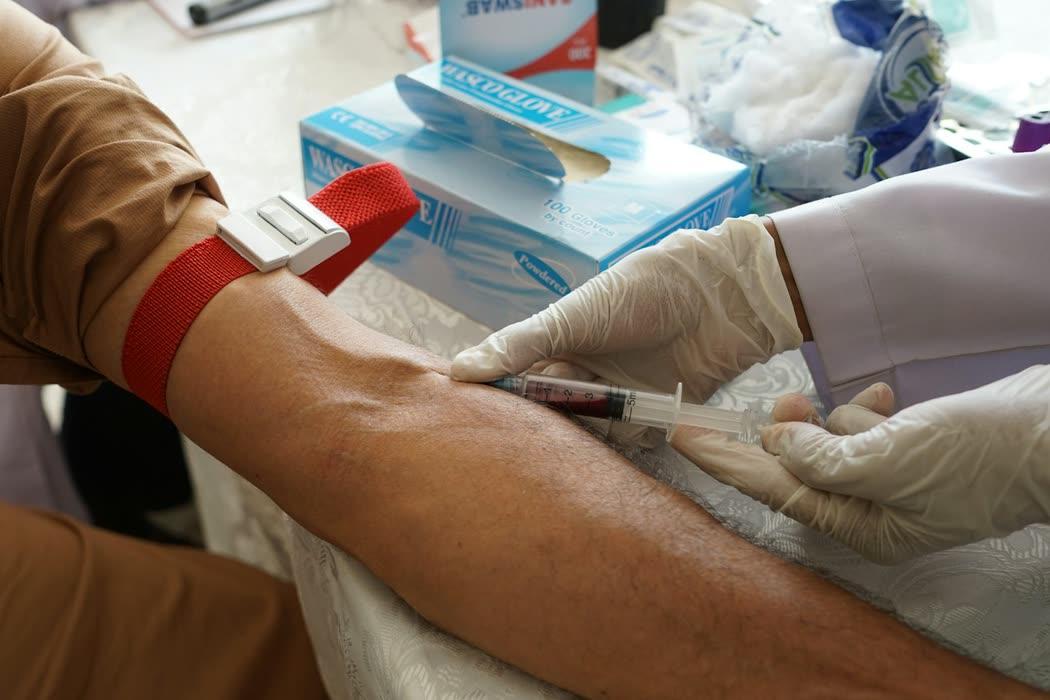
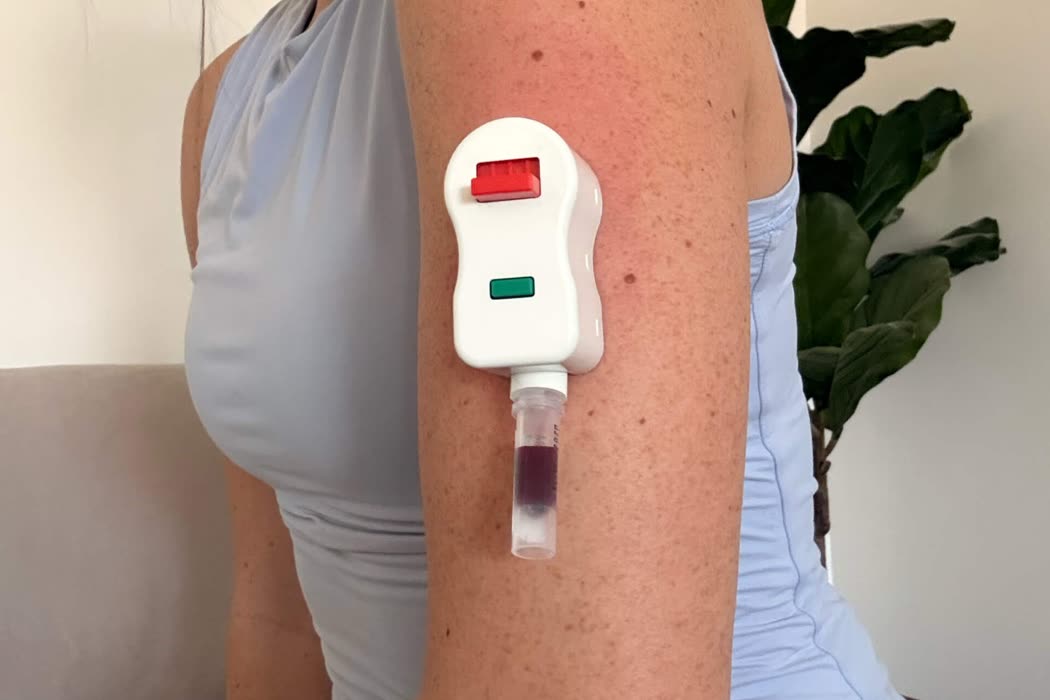
- It hurts less and takes less time.All six need a venous draw. Adults rate a venous draw about 3 out of 10 and an upper-arm collector about 1. In one trial about half rated the draw as moderate pain or worse, and about 1 in 8 as severe. The kit takes about 24 minutes at home; a lab visit takes 43 to 102 minutes door to door.
- Ultimate 360 wins too, narrowly.The largest SiPhox panel also costs less per completed test than Superpower, WHOOP Comprehensive, Function and Everlywell 360. Against the $199 panels the margin is about $2. At equal completion, 90% on both sides, it does not win.
- Two cost less, and both fall outside the claim.WHOOP’s $69 basic panel covers routine labs only: a blood count, a metabolic panel and lipids. Rythm, at $98.88 a kit with shipping, ships its samples at uncontrolled temperature.
The first test, with each company’s own discount
The table above uses list prices. Most people start with one test, and both kit companies discount it. The SiPhox first test is $62 before shipping. Both companies let you cancel anytime.
| First test | All in | Price with shipping | Offer |
|---|---|---|---|
| Rythm, Black Friday | $92 | $75.18 | 30% off, $55.30 |
| Rythm, everyday | $100 | $83.08 | 20% off the first order, $63.20 |
| SiPhox base kit | $105 | $87.00 | First test $62 |
| WHOOP Basic | $134 | $69.00 | List price. A lab draw, no shipping. |
All in here means price per completed test plus your time, with nothing added for the needle, after-effects or cold shipping. On that basis the SiPhox first test costs less than every lab-draw offer on this page. Rythm’s first kit costs $4.36 less with its everyday first-order offer and $13.13 less during its Black Friday sale. SiPhox ships cold to protect accuracy and Rythm does not: count that at $13.14 a kit or more and SiPhox is the lowest of all ten. Rythm also gives first-time buyers a 90-day money-back guarantee. Offers read 25 November 2026 and will change.
Prices
Read from the live pages. Not from memory.
Claude opened each pricing or checkout page in a browser on 24 November 2026. List prices are used in the model; promotions are shown separately.
| Offer | List price | What it buys | Seen on the day |
|---|---|---|---|
| SiPhox base panel | $124 + shipping | One EasyDraw kit per cycle. Test monthly, quarterly or every 6 months. | First test $62. Shipping is calculated from the address. |
| SiPhox Ultimate 360 | +$125 | Up to 60+ biomarkers per kit. | |
| Rythm | $79 + shipping | One kit, 25+ biomarkers. | $55.30 (Black Friday). Checkout adds $19.88 shipping. |
| Function | $365 / year | Two rounds of lab draws, 160+ tests in total. | Not at this price in New York or New Jersey. |
| Superpower | $199 / year | One lab draw, 100+ biomarkers. | $179 (Black Friday). |
| Oura Health Panels | $99 | One lab draw, 50 biomarkers. Oura members only. | Not sold in Arizona, New Jersey, New York or Rhode Island. |
| WHOOP Comprehensive | $199 | One lab draw, 75 biomarkers. No membership needed. | As low as $150 a test with 4 or more. Not offered in Arizona, Hawaii, Wyoming or the Dakotas. |
| WHOOP Basic | $69 | One lab draw, 53 biomarkers. Routine labs only: blood count, metabolic panel, lipids. | Not offered in Arizona, Hawaii, Wyoming or the Dakotas. |
| Apple Health + Quest | $119 | One lab draw, 50+ biomarkers. | Announced. Not yet released. |
| Everlywell 360 | $399 / year | One lab draw, 83 biomarkers. | |
| LetsGetChecked Diabetes & Heart | $99 | One at-home kit, 6 markers. | Lp(a) currently unavailable. |
The model uses $149 per SiPhox kit: $124 plus $25 shipping, the figure on the SiPhox answers page. The checkout calculates shipping from the address, so treat $25 as an estimate. Rythm’s checkout adds $10.89 priority sample shipping and $8.99 order shipping, with $0 tax at the checkout read, so a Rythm kit is $98.88. Oura's ring and membership are left out of its price.
Time and risk
The sticker price is not the whole price.
A lab draw costs a trip. A kit costs a few minutes at home and a hand-off to a courier. The model prices a lab visit at the average US hourly wage, $38, and shows kit time both at that rate and at half. The calculator further down uses the same $38 and shows why.
Minutes per test
Collection itself takes about 10 minutes. The 24 adds activation, packing and the courier hand-off. Range for a lab visit: 43 to 102 minutes. No published source times a Quest visit end to end, and booking time is an assumption.
Collection risks, side by side
| Per collection | Venous draw | Upper-arm collector |
|---|---|---|
| Bruising | ~10% | ~2% |
| Pain, 0 to 10 | ~3 | ~1 |
| Fainting | 0.004%–0.7% | too few data |
| Nearly fainting | up to 2.6% | too few data |
| Nerve injury | 1 in 67,000 | none reported |
| Failed collection | ~0.4% | ~6.6% |
Venous pain is taken from the higher published studies: a 2016 emergency-department trial (median 3 without pain relief) and a 2011 trial (about half moderate or worse). A 2024 head-to-head study found 2. The collector figures come from small studies of similar upper-arm devices, not of the EasyDraw kit. The last row cuts against SiPhox: a failed collection is more than 16 times as likely.
What SiPhox does about failed samples
If a kit fails, SiPhox replaces it free, up to twice. With three attempts at a 6.6% failure rate, fewer than 1 member in 1,000 ends without a result. Even at 24%, fewer than 2 in 100.
Every kit also includes 1:1 live support to guide you through collection with the virtually painless collector. In studies of a similar device, supervised collections came up short less than half as often as unsupervised ones.
Distance
No study measures how far Americans live from a draw site. Quest reports about 2,400 sites. Its own locator shows the nearest one 50 miles from Montpelier, Vermont, and a single site in Cheyenne, Wyoming, with the next 45 miles away. One in five Americans lives in a rural area.
The model charges the drive as well: 23.5 cents a mile, the IRS rate for medical driving, on the median 9.2-mile round trip to a medical visit. That is $2.16. At the 76-cent business rate it would be $6.99.
Prefer a draw at home? Quest charges $99 to send a phlebotomist. Oura’s panel done at home then costs $198 and Apple’s $218, against $149 for the SiPhox kit with shipping, and it is still a venous draw.
Cost per completed test
Move the assumptions. Watch the order change.
This is the model from the proof: price divided by the share of paid tests you complete, plus your time and the drive, plus what skipping a needle is worth to you, plus the chance a draw leaves you faint or unwell. Time at home counts at half, because you choose when to do it. The defaults are central estimates.
An illustration of the model, in dollars per completed test. The exact break-even points are theorems in the Lean file. Oura's ring and membership are excluded. Apple's panel is not yet on sale. Shipping of $25 is assumed for SiPhox and for Rythm. The kit is charged nothing for fainting, because the studies of upper-arm collectors are too small to give a rate.
What is an hour worth?
What people pay to save time and to skip a trip:
$19 an hour. Lyft riders across US cities, offered different prices and waits, behaved as if an hour was worth about $19 (2020 dollars).
$9.30 a trip. A delivered meal costs about $9.30 more than the same meal picked up. That is what people pay to skip an errand.
$38 an hour. Average US hourly earnings.
Why the calculator uses $38
A lab visit is 74 minutes door to door. Priced at Lyft's $19 an hour plus the $9.30 errand premium, it costs $32.73. Priced at the $38 wage alone, it costs $46.87.
The calculator uses $38. It is the higher of the two and it favors SiPhox, which is why it is flagged here. The errand premium is not added on top, because $38 an hour already more than covers it.
It goes no higher. Employers spend $46.89 an hour per worker once benefits are counted, and some cost studies use that figure. At that rate a lab visit costs $11 more and the kit $2 more, so the kit wins by more. Lean proves the headline holds for any hour worth $38 or more; $46.89 appears only as that check.
At $38 an hour the kit beats Apple's $119 panel by about $41 and Oura's $99 panel by about $16. Leave out the needle, the drive and the after-effects of a draw and Oura costs its members $2.59 less. Against Function, Superpower, WHOOP Comprehensive and Everlywell 360 the kit costs less whatever an hour is worth. These figures are theorems in SiPhoxClaims.lean.
Cold shipping, accuracy and Rythm
SiPhox returns every sample in a temperature-controlled mailer with cold packs, to protect accuracy. That costs SiPhox $20 to $30 a kit more than shipping without temperature control. Rythm ships at uncontrolled temperature: its instructions say to keep the sample at room temperature and not to refrigerate it, but a mailer in transit takes whatever temperature the season and the route bring, all year and across the country.
With shipping, Rythm is $98.88 a kit and SiPhox is $149. Add what cold shipping costs and Rythm is $118.88 to $128.88. It is still the cheaper kit.
For the SiPhox kit to cost less, cold shipping would have to be worth more than $55.69 a kit to you, or Rythm would have to lose more than 33% of its results in transit. There is no evidence for either.
Why temperature in transit matters. Unspun blood keeps changing after it leaves the body, and faster when warm. Freezing is no better: ice bursts red cells. Published studies:
- Held at 30°C, a summer shipment, whole blood was outside US lab accuracy limits (CLIA) for 5 of 20 common analytes after 24 hours and for 9 of 20 after 72 hours, among them ALT, creatinine, glucose and potassium. The authors call whole blood near 0°C “largely untestable”. Iacovetti et al., Pract Lab Med 2025.
- Across 81 analytes, samples were more stable at 4°C than at 25°C. Among the 20 affected by storage as whole blood: FSH, estradiol, prolactin, folate and C-peptide. Oddoze et al., Clin Biochem 2012.
- Over 7 days, chilling held ALT, creatinine, CK and GGT within 4%; room temperature did not. Clark et al., Int J Epidemiol 2003.
The same studies show what does not need cooling: cholesterol, HDL, triglycerides, ApoA1, ApoB and albumin moved less than 4% in a week at room temperature (Clark 2003). These studies used tube-drawn blood, not consumer collection kits, and no published study compares cooled and uncooled consumer kits head to head.
If a blood draw makes you faint
Some people faint at a venous draw, or feel unwell for hours after one. In a US study of 4,050 draws done at home or at work, 0.7% fainted and another 2.6% came close. A hospital lab in Japan recorded far fewer: 1 faint in 25,000 draws.
The calculator charges each lab draw for this: the chance it happens, times the hours you lose, times what your hour is worth. At 3.3% and one lost hour that is $1.25 a draw. Mayo Clinic describes recovery as starting within a minute, with 15 to 30 minutes of caution before standing up.
If it happens to you often, the sums move fast. Lose a full day to one draw in eight and every lab-draw offer here costs more than the kit, WHOOP’s $69 panel included. If you cannot get through a draw at all, a lab test buys you no result at any price.
The one hour is an assumption. No study measures the time lost. At the hospital rate the charge is about a cent, and the kit still costs less than Oura’s panel once the drive is counted. The US study is from 1992 and was 79% men. The kit is charged nothing, because studies of upper-arm collectors are too small to give a rate. That favors SiPhox.
Against lab memberships
Per test, the base kit costs less than Function, Superpower, WHOOP Comprehensive and Everlywell 360 at any visit length. Function's lead shrinks further when its second round goes unused.
Against $99–$119 panels
At the $38 wage, with time at home at half, the base kit beats Apple's panel before anything is counted for the needle, the drive or after-effects. It does so at any wage above $16.29 an hour. It beats Oura's panel once those three are worth $2.59 together; the defaults come to $18.41. At $28 an hour Oura needs $12.91, and at $19 an hour $22.20.
If you dread needles
At $55 per draw avoided, the base kit beats Oura, Apple, WHOOP Comprehensive, Superpower, Everlywell 360 and Function, and Ultimate 360 beats Function. With time at home at half value it also beats WHOOP Basic. Needle fear affects 20–30% of adults aged 20 to 40. A Baltimore population study put lifetime blood-injection-injury phobia at 3.5%, about 9.4 million US adults.
Breadth
Bring your physical. Close most of the gap.
Function's annual draw covers 100+ tests. The largest SiPhox panel, Ultimate 360, reports up to 60+ biomarkers. Members can upload outside lab results without limit, so the CBC and CMP from a yearly physical sit beside the SiPhox panel.
Counting only markers the SiPhox panel does not already report, a CMP adds 6 and a CBC with differential adds 14. That makes 81: four fifths of Function's count, not parity. Lean checked that arithmetic too.
On benefit, this note claims less than you might expect. No outcome study exists for any of these services, SiPhox included. The proof treats "a completed SiPhox test plus an uploaded CBC and CMP is worth as much as a completed lab panel" as an assumption, labelled as one.
Biomarkers per test, as each company counts them.
What SiPhox measures that Rythm does not
In SiPhox’s four included panels: HbA1c, C-peptide, Lp(a), ApoA1, DHEA-S, LH, FSH, prolactin, TPO and thyroglobulin antibodies, ALT, AST, bilirubin, BUN and PSA, plus free T3 and T4 for men.
Ultimate 360 adds: iron, iron saturation, iron-binding capacity, B12, folate and GGT.
Rythm has and no SiPhox panel does: uric acid, fructosamine, and hemoglobin and hematocrit (not in New York).
Read on rythmhealth.com/biomarkers on 25 November 2026 and on the SiPhox panel pages on 27 November 2026. Rythm lists 30 biomarkers and SiPhox’s base panel 28; both counts include calculated ratios. The gap is in which markers, not how many.
Assumptions
What is fact, and what is assumed.
Lean verifies deductions, not inputs. These are the inputs, sorted by how far you should trust them.
- Read from the pageList prices, read on each company's own pricing or checkout page on 24 and 25 November 2026.
- Read from the pageLive 1:1 support during collection, from the SiPhox homepage. Rythm's pages describe a recorded video, email and chat.
- PublishedYour time is worth $38 an hour, the average US hourly earnings. The slider above the table goes from $15 to $200.
- PublishedA lab visit takes 74 minutes door to door, with a range of 43 to 102. Travel comes from the federal time-use survey; booking and waiting are estimates.
- PublishedThe drive costs $2.16: the IRS medical rate of 23.5 cents a mile on the median 9.2-mile round trip to a medical visit.
- PublishedPain: about 3 out of 10 for a venous draw and about 1 for an upper-arm collector. The collector studies are small and are not of the EasyDraw kit.
- PublishedFainting: 3.3% of draws leave someone faint or nearly so, from a 1992 US study of 4,050 draws. That is the high end; a hospital lab found 0.004%.
- PublishedA home draw: Quest charges $99 to send a phlebotomist.
- SiPhox figureShipping is $25 a kit, from the SiPhox answers page; the checkout calculates it from your address. Rythm's checkout shows $19.88 ($10.89 + $8.99), read 27 November 2026.
- SiPhox figureCold shipping costs SiPhox $20 to $30 a kit more than uncontrolled shipping and protects accuracy. Rythm ships at uncontrolled temperature and is charged $25 for it.
- SiPhox figureCollection takes about 10 minutes, and 24 in all with activation, packing and the courier hand-off. A failed kit is replaced free, up to twice.
- AssumptionCompletion: 90% of kits and 80% of lab draws are used, and Function members use 1.45 of their two rounds. No company publishes these. In one trial 50% tested with a postal kit against 27% referred to a clinic; other studies found no gain.
- AssumptionTime at home counts at half your hourly rate, because you choose when to do it, and a lab visit at the full rate. US transport guidance values personal time at 50%.
- AssumptionAvoiding a needle is worth $15 a draw. Direct adult studies put it at $0 to $3; the $15 comes from parents valuing a child's injection.
- AssumptionA faint or near-faint costs one hour. No study measures this. The kit is charged nothing for fainting.
- AssumptionA completed SiPhox test plus an uploaded CBC and CMP is worth as much as a completed lab panel. No outcome study exists for any provider.
Every price, assumption and source on this page is also in one data file: siphox-cost-comparison.json.
The SiPhox service
What a SiPhox membership includes.
Read from siphoxhealth.com on 27 November 2026. Prices and offers change; the site is the final word.
What it costs
First test: $62 plus shipping. That is the Black Friday price, half of the $124 introductory offer.
Every test after that: $124 plus shipping. The checkout calculates shipping from your address; the SiPhox answers page gives $25.
Ultimate 360: +$125 a test. The first one is $187 ($62 + $125), then $249, plus shipping.
Billed on the cadence you choose: monthly, quarterly or every 6 months, and you can change the cadence, pause or cancel at any time. HSA/FSA eligible.
How a test works
The EasyDraw kit uses a virtually painless collector on the upper arm. No vein draw, no lab visit. Collection takes about 10 minutes, with 1:1 live support to guide you.
The sample goes back overnight in a temperature-controlled mailer with a cold pack, to protect accuracy, to a CLIA-certified lab. Results arrive in 7 to 10 days.
A kit that fails is replaced free, up to twice. Not available in New York or Hawaii.
Included with every membership
Personalized insights and an action plan. Supplement recommendations. Sai, a 24/7 AI health assistant. One dashboard with trends, a biological-age estimate and a future outlook. Wearable and CGM sync (Apple Watch, Oura, Fitbit). An in-app body composition scan. Sharing with your doctor.
Unlimited uploads of outside lab results, analyzed alongside your SiPhox panels. Anyone can upload a past report from Quest, Labcorp or any lab for a free analysis.
Member pricing on add-ons: Prenuvo whole-body MRI, 1:1 health coaching, an advanced gut health test and a 295-allergen panel.
The panels
The first four are included at no extra cost. Pick one for each test and switch whenever you like. Counts are per test, as SiPhox states them; the lists include sex-specific markers and calculated ratios.
Longevity Essentials
HbA1c, eAG, C-peptide, albumin, cortisol; HDL, LDL, triglycerides, total cholesterol, VLDL, ApoB, ApoA1, Lp(a) and five lipid ratios; hsCRP; TSH; FSH, LH, estradiol, total and free testosterone, DHEA-S, SHBG and three hormone ratios; vitamin D, ferritin.
Heart & Metabolic
HDL, LDL, triglycerides, total cholesterol, VLDL, ApoB, Lp(a) and three ratios; hsCRP; HbA1c, C-peptide, cortisol, TG:HDL; TSH; creatinine, BUN, eGFR, BUN:creatinine; ALT, AST, ALP, total, direct and indirect bilirubin, AST:ALT; total protein.
Thyroid Focus
TSH, free T3, free T4, TPO antibodies, thyroglobulin antibodies, FT3:FT4, TSH:T4; HDL, LDL, triglycerides, LDL:HDL; hsCRP; cortisol, TG:HDL; SHBG; ferritin; ALT, AST, AST:ALT; creatinine, eGFR.
Hormone Focus
Total testosterone (men and women), free and % free testosterone, SHBG, estradiol, progesterone, prolactin, LH, FSH, DHEA-S, free androgen index, LH:FSH, cortisol:DHEA-S; albumin, cortisol; PSA.
Ultimate 360
Everything below, in one test.
GLP Optimization
For people on GLP-1 medicines: blood sugar, lipids, liver, kidney, thyroid, hormones, iron studies, B12 and folate, with body composition and symptom tracking in the app.
IGF-1 add-on
Insulin-like growth factor 1, added to any panel.
Every marker in Ultimate 360
| System | Markers |
|---|---|
| Heart | HDL, triglycerides, ApoB, total cholesterol, total cholesterol:HDL, ApoA1, VLDL (calc), LDL:HDL, LDL:ApoB, ApoB:ApoA1, LDL (calc), Lp(a) |
| Inflammation | High-sensitivity CRP |
| Metabolic | HbA1c, albumin, C-peptide, triglycerides:HDL, cortisol, estimated average glucose |
| Thyroid | TSH, free T3, free T4, TPO antibodies, thyroglobulin antibodies, TSH:T4, free T3:free T4 |
| Hormones | FSH, estradiol (sensitive), total testosterone (men and women), DHEA-S, LH, SHBG, free testosterone (calc), LH:FSH, testosterone:cortisol, cortisol:DHEA-S, prolactin, progesterone, free androgen index, % free testosterone |
| Nutrition | Vitamin D, ferritin, iron, UIBC, total protein, iron saturation, vitamin B12, folate, TIBC |
| Prostate | PSA |
| Liver | ALT, AST, ALP, direct bilirubin, total bilirubin, AST:ALT, GGT, indirect bilirubin (calc) |
| Kidney | Creatinine, BUN, eGFR, BUN:creatinine |
| Longevity | Biological age; IGF-1 as a +$70 add-on |
SiPhox counts 61 markers per test, or 60, depending on sex. The page lists 64 entries because some apply to men or to women only.
Switch panels from test to test and the base price covers almost all of Ultimate 360.
- 57 markers over four tests.Rotate the four included panels across four tests and you see 57 different listed markers, 56 of Ultimate 360’s 64 entries.
- $596 against $1,096.Four tests at $124 plus $25 shipping cost $596. Four Ultimate 360 tests cost $1,096.
- What rotation leaves out.The iron studies (iron, UIBC, TIBC, iron saturation), B12, folate, GGT and the biological-age score. Each rotated marker is measured once every four tests, not every time.
The teams
Who builds each test.
A count anyone can repeat: the people with a PhD or an MD among the leaders each company names. SiPhox has the highest share. Oura has the most in total.
| Company | PhD or MD | Share | PhDs | MDs | Leaders counted | Source |
|---|---|---|---|---|---|---|
| 1. SiPhox Health | 9 | 56% | 6 | 3 | 16 | Leadership page |
| 2. Rythm | 4 | 50% | 3 | 1 | 8 | About page |
| 3. Oura | 11 | 41% | 7 | 5 | 27 | Leadership page and science and clinical leaders page |
| 4. Function | 4 | 29% | 1 | 4 | 14 | About page |
| 4. Everlywell | 2 | 29% | 1 | 1 | 7 | Science page and 2026 press release |
| 6. Superpower | 1 | 25% | 0 | 1 | 4 | Co-founders and its Chief Longevity Officer |
| 7. LetsGetChecked | 1 | 20% | 0 | 1 | 5 | About page |
| 7. WHOOP | 2 | 20% | 1 | 1 | 10 | Press releases |
| 9. Apple | 0 | 0% | 0 | 0 | 16 | Leadership page, all of Apple |
Ranked by share. Read 27 November 2026. The rule is the same for every company: everyone on its leadership team, plus the science and clinical leaders it names as employees, down to directors, each one looked up. Advisors and boards are not counted. On count alone Oura is first with 11, because it names 13 science and clinical leaders beside its 16 executives; SiPhox is second with 9. One person at Oura and one at Function hold both an MD and a PhD, so those rows add up to more than the total. SiPhox’s page lists a partnership team under its own heading, apart from the leadership team; it is not counted, and counting it would make SiPhox 9 of 17 (53%), still first on share. SiPhox’s 16 include Pika Ksela, MD, Health Programs Lead, whom SiPhox is adding to its leadership page. Everlywell’s list is the four people on its science page plus its chief executive, chief commercial officer and chief product officer from a September 2026 press release. WHOOP publishes no leadership page, so its ten come from its own press releases: Will Ahmed, Michener Chandlee, Ami Bhatt, MD, Kyle Leahy, DJ van Hameren, Kristen Moss, Johan Liden, Jason Lynch, Emily Capodilupo and Kristen Holmes, PhD. Superpower’s list is its three co-founders and its Chief Longevity Officer.
The founders are scientists
Diedrik Vermeulen, PhD, co-founder and CTO. PhD in photonics from Ghent University and a research scientist at MIT. At Acacia Communications he helped commercialize the first coherent transceiver built on silicon photonics. SiPhox credits him with more than 30 patents and more than 100 publications.
Michael Dubrovsky, co-founder and CEO. Materials chemistry and photonics research at Technion and MIT. Inventor on 21 patents, author of 18 publications, and has served as a contributor to a Clinical and Laboratory Standards Institute document committee (ILA20).
The people behind the measurements
David Rissin, PhD, VP of Science. Co-founder of Quanterix and a key inventor of Single Molecule Array (Simoa) technology. He is first author of the 2010 Nature Biotechnology paper that introduced digital ELISA, which measures blood proteins at concentrations once thought undetectable.
Jordan Isenberg, MD-MBA, MSc, Chief Medical Officer. Author of 16 peer-reviewed publications.
Six more of the leadership team hold a PhD or an MD:
- Cameron Habib, PhD, Chief of Staff
- Sarat Gundavarapu, PhD, Director of Photonics and Readers
- Ella Borberg, PhD, Head of Manufacturing
- Pedro Andrade, PhD, Site Manager, Portugal
- Pavel Korecky, MD, Director of Clinical Product Operations
- Pika Ksela, MD, Health Programs Lead
Bios as SiPhox states them on its leadership page.
Questions
Short answers, with the numbers.
Is SiPhox cheaper than Function?
Yes. At the default assumptions the SiPhox base kit costs $174 per completed test, all in, and Function costs $317. Lean proves the kit costs less than Function whatever your hour is worth.
What does Rythm cost at checkout?
One Rythm kit costs $98.88 at checkout: the $79 list price plus $10.89 priority sample shipping and $8.99 order shipping, with $0 tax at the checkout read on 27 November 2026. All in, that is $143 per completed test, about $31 less than the SiPhox base kit, and Rythm ships its samples at uncontrolled temperature.
What does Lean verify and what does it not?
Lean checks that every comparison follows from the inputs, down to each rounded figure in the cost table, and all 33 theorems in the main file pass with no errors. It does not check the inputs themselves: prices, study figures and assumptions such as 80% of lab draws completed are listed under Assumptions with how far to trust each one.
Check it yourself
The whole comparison. One file.
You do not have to take anyone’s word for it. Lean is free and runs in a browser.
- Copy the code below.
- Paste it into live.lean-lang.org.
- Wait for it to finish. No errors means every theorem holds. The lines at the bottom list any axioms used: none, or Lean's three standard ones.
import Mathlib

/-!
# SiPhoxClaims.lean: every comparison on the page, checked

Research note by Claude Fable 5.2 and Claude Opus 5.5, for SiPhox Health, 27 November 2026.

Check it: paste into https://live.lean-lang.org (it provides Mathlib). It passes when
there are no errors and the "#print axioms" lines at the bottom report only Lean's
standard axioms (propext, Classical.choice, Quot.sound) or none.

Lean verifies the deductions. It cannot verify the inputs. Every input below is either
read from a company's own page (dates on the page), taken from a published study, a
figure SiPhox gave, or a stated assumption. The page lists which is which.

Money is in dollars, as exact rationals. Default inputs:
  your hour                     38 dollars (average US hourly earnings)
  kit time                      24 minutes at home, counted at half your rate,
                                times 1.066 for redoing about 6.6 percent of kits
  lab visit                     74 minutes, times 1.0066 for failed draws,
                                plus 0.222 minutes of expected rebooking
  drive                         2.16 dollars (23.5 cents a mile, 9.2-mile round trip)
  needle                        15 dollars for each venous draw avoided
  after-effects                 3.3 percent chance of losing 1 hour
  completion                    90 percent of kits, 80 percent of lab draws,
                                Function members use 1.45 of 2 rounds
  shipping                      25 dollars a kit for SiPhox; Rythm's checkout total is 98.88
  not cold                      25 dollars charged to Rythm, which ships at uncontrolled
                                temperature (the middle of what cold shipping costs SiPhox)
-/

namespace SiPhoxClaims

/-! ## Part 1. The cost model -/

/-- Kit time in dollars: 24 minutes at half the hourly rate, plus redos. -/
def kitTime (w : ℚ) : ℚ := w / 60 * 24 * (1066 / 1000) / 2

/-- Lab time in dollars: m minutes door to door, plus failed draws and rebooking. -/
def labTime (w m : ℚ) : ℚ := w / 60 * (m * (10066 / 10000) + 222 / 1000)

/-- Cost of one completed kit test. -/
def kit (price cold w : ℚ) : ℚ := price / (9 / 10) + kitTime w + cold

/-- Cost of one completed lab-draw test. -/
def lab (price done w m drive needle faint hours child : ℚ) : ℚ :=
  price / done + labTime w m + drive + needle + faint * hours * w + child

/-- A lab draw at the default inputs, with your hour w and childcare c. -/
def labD (price done w c : ℚ) : ℚ := lab price done w 74 (216 / 100) 15 (33 / 1000) 1 c

/-- The ten offers at their list prices, in dollars per test. -/
def siphoxBase (w : ℚ) : ℚ := kit 149 0 w          -- 124 + 25 shipping
def ultimate360 (w : ℚ) : ℚ := kit 274 0 w         -- 124 + 125 upgrade + 25 shipping
def rythm (w : ℚ) : ℚ := kit (9888 / 100) 25 w     -- 79 + 10.89 + 8.99, plus 25 not cold
def oura (w c : ℚ) : ℚ := labD 99 (8 / 10) w c
def apple (w c : ℚ) : ℚ := labD 119 (8 / 10) w c
def whoopBasic (w c : ℚ) : ℚ := labD 69 (8 / 10) w c
def whoopComprehensive (w c : ℚ) : ℚ := labD 199 (8 / 10) w c
def superpower (w c : ℚ) : ℚ := labD 199 (8 / 10) w c
def function (w c : ℚ) : ℚ := labD 365 (145 / 100) w c
def everlywell360 (w c : ℚ) : ℚ := labD 399 (8 / 10) w c

/-! ## Part 2. The table on the page, at the defaults ($38 an hour, no childcare)

Each row is shown rounded to the dollar. These bounds prove each rounding. -/

theorem table_rounded :
    (1425 / 10 : ℚ) ≤ rythm 38 ∧ rythm 38 < 1435 / 10 ∧
    (1515 / 10 : ℚ) ≤ whoopBasic 38 0 ∧ whoopBasic 38 0 < 1525 / 10 ∧
    (1735 / 10 : ℚ) ≤ siphoxBase 38 ∧ siphoxBase 38 < 1745 / 10 ∧
    (1885 / 10 : ℚ) ≤ oura 38 0 ∧ oura 38 0 < 1895 / 10 ∧
    (2135 / 10 : ℚ) ≤ apple 38 0 ∧ apple 38 0 < 2145 / 10 ∧
    (3125 / 10 : ℚ) ≤ ultimate360 38 ∧ ultimate360 38 < 3135 / 10 ∧
    (3135 / 10 : ℚ) ≤ whoopComprehensive 38 0 ∧ whoopComprehensive 38 0 < 3145 / 10 ∧
    (3135 / 10 : ℚ) ≤ superpower 38 0 ∧ superpower 38 0 < 3145 / 10 ∧
    (3165 / 10 : ℚ) ≤ function 38 0 ∧ function 38 0 < 3175 / 10 ∧
    (5635 / 10 : ℚ) ≤ everlywell360 38 0 ∧ everlywell360 38 0 < 5645 / 10 := by
  simp only [rythm, whoopBasic, siphoxBase, oura, apple, ultimate360, whoopComprehensive,
    superpower, function, everlywell360, labD, lab, kit, kitTime, labTime]
  norm_num

/-! ## Part 3. The headline

The base kit costs less per completed test than all six offers that go beyond routine
labs and keep the sample cold or need no shipping, for any hour worth 38 dollars or
more, with or without childcare. -/

theorem headline_price (w c : ℚ) (hw : 38 ≤ w) (hc : 0 ≤ c) :
    siphoxBase w < oura w c ∧ siphoxBase w < apple w c ∧
    siphoxBase w < whoopComprehensive w c ∧ siphoxBase w < superpower w c ∧
    siphoxBase w < function w c ∧ siphoxBase w < everlywell360 w c := by
  simp only [siphoxBase, oura, apple, whoopComprehensive, superpower, function,
    everlywell360, labD, lab, kit, kitTime, labTime]
  refine ⟨?_, ?_, ?_, ?_, ?_, ?_⟩ <;> nlinarith

/-- Against the four memberships the kit wins whatever an hour is worth. -/
theorem headline_price_memberships_any_wage (w c : ℚ) (hw : 0 ≤ w) (hc : 0 ≤ c) :
    siphoxBase w < whoopComprehensive w c ∧ siphoxBase w < superpower w c ∧
    siphoxBase w < function w c ∧ siphoxBase w < everlywell360 w c := by
  simp only [siphoxBase, whoopComprehensive, superpower, function, everlywell360,
    labD, lab, kit, kitTime, labTime]
  refine ⟨?_, ?_, ?_, ?_⟩ <;> nlinarith

/-- Pain: about 3 out of 10 for a venous draw, about 1 for an upper-arm collector.
Time: 24 minutes for the kit, 43 to 102 for a lab visit. -/
theorem headline_pain_and_time : (1 : ℕ) < 3 ∧ (24 : ℕ) < 43 ∧ 43 ≤ 74 ∧ 74 ≤ 102 := by
  decide

/-- Done at home with Quest's 99-dollar phlebotomist visit, Oura's and Apple's panels cost
more than the kit on price alone. -/
theorem home_draws : (149 : ℕ) < 99 + 99 ∧ (149 : ℕ) < 119 + 99 := by decide

/-! ## Part 4. Ultimate 360 wins too, narrowly -/

theorem ultimate_wins (w c : ℚ) (hw : 38 ≤ w) (hc : 0 ≤ c) :
    ultimate360 w < whoopComprehensive w c ∧ ultimate360 w < superpower w c ∧
    ultimate360 w < function w c ∧ ultimate360 w < everlywell360 w c := by
  simp only [ultimate360, whoopComprehensive, superpower, function, everlywell360,
    labD, lab, kit, kitTime, labTime]
  refine ⟨?_, ?_, ?_, ?_⟩ <;> nlinarith

/-- The margin against the 199-dollar panels is about 2 dollars. -/
theorem ultimate_margin :
    (19 / 10 : ℚ) < superpower 38 0 - ultimate360 38 ∧
    superpower 38 0 - ultimate360 38 < 2 := by
  simp only [superpower, ultimate360, labD, lab, kit, kitTime, labTime]
  norm_num

/-- At equal completion, 90 percent on both sides, Ultimate 360 does not win. -/
theorem ultimate_equal_completion : labD 199 (9 / 10) 38 0 < ultimate360 38 := by
  simp only [ultimate360, labD, lab, kit, kitTime, labTime]
  norm_num

/-! ## Part 5. The two that cost less -/

/-- Rythm costs less than the base kit at every wage, even after the not-cold charge. -/
theorem rythm_cheaper (w : ℚ) : rythm w < siphoxBase w := by
  simp only [rythm, siphoxBase, kit]
  norm_num
  linarith

/-- WHOOP's 69-dollar routine panel costs less at the defaults. -/
theorem whoop_basic_cheaper : whoopBasic 38 0 < siphoxBase 38 := by
  simp only [whoopBasic, siphoxBase, labD, lab, kit, kitTime, labTime]
  norm_num

/-- Cold shipping would have to be worth more than 55.69 dollars a kit for the base kit
to cost less than Rythm. -/
theorem cold_threshold (c w : ℚ) : kit 149 0 w < kit (9888 / 100) c w ↔ 5012 / 90 < c := by
  simp only [kit]
  constructor <;> intro h <;> linarith

/-- Losing up to 33 percent of its results in transit still leaves Rythm cheaper. -/
theorem rythm_loss (L : ℚ) (_h0 : 0 ≤ L) (h : L ≤ 33 / 100) :
    (9888 / 100) / (9 / 10 * (1 - L)) < 149 / (9 / 10) := by
  have hp : 0 < 9 / 10 * (1 - L) := by nlinarith
  rw [div_lt_div_iff₀ hp (by norm_num)]
  nlinarith

/-! ## Part 6. The first test, with each company's own discount

All in here means price per completed test plus your time, nothing else. -/

def firstKit (p : ℚ) : ℚ := p / (9 / 10) + kitTime 38
def firstLab (p : ℚ) : ℚ := p / (8 / 10) + labTime 38 74

theorem first_test_rounded :
    (915 / 10 : ℚ) ≤ firstKit (7518 / 100) ∧ firstKit (7518 / 100) < 925 / 10 ∧
    (995 / 10 : ℚ) ≤ firstKit (8308 / 100) ∧ firstKit (8308 / 100) < 1005 / 10 ∧
    (1045 / 10 : ℚ) ≤ firstKit 87 ∧ firstKit 87 < 1055 / 10 ∧
    (1335 / 10 : ℚ) ≤ firstLab 69 ∧ firstLab 69 < 1345 / 10 := by
  simp only [firstKit, firstLab, kitTime, labTime]
  norm_num

/-- Rythm's first kit is 4.36 dollars less with its everyday first-order offer and
13.13 less on Black Friday, so cold shipping worth 13.14 or more puts SiPhox first. -/
theorem first_test_gaps :
    firstKit 87 - firstKit (8308 / 100) = 196 / 45 ∧
    firstKit 87 - firstKit (7518 / 100) = 197 / 15 ∧ (197 / 15 : ℚ) < 1314 / 100 ∧
    firstKit 87 < firstLab 69 := by
  simp only [firstKit, firstLab, kitTime, labTime]
  norm_num

/-! ## Part 7. The calculator notes -/

/-- At 38 dollars an hour the kit beats Apple by about 41 dollars and Oura by about 16. -/
theorem margins_at_38 :
    (40 : ℚ) < apple 38 0 - siphoxBase 38 ∧ apple 38 0 - siphoxBase 38 < 41 ∧
    (15 : ℚ) < oura 38 0 - siphoxBase 38 ∧ oura 38 0 - siphoxBase 38 < 16 := by
  simp only [apple, oura, siphoxBase, labD, lab, kit, kitTime, labTime]
  norm_num

/-- Price and time only: what the needle, drive and after-effects must be worth for
the kit to beat Oura, at 38, 28 and 19 dollars an hour. -/
def ouraGap (w : ℚ) : ℚ := siphoxBase w - (99 / (8 / 10) + labTime w 74)

theorem oura_gaps :
    (259 / 100 : ℚ) < ouraGap 38 ∧ ouraGap 38 < 2595 / 1000 ∧
    (12905 / 1000 : ℚ) < ouraGap 28 ∧ ouraGap 28 < 12915 / 1000 ∧
    (22195 / 1000 : ℚ) < ouraGap 19 ∧ ouraGap 19 < 22205 / 1000 := by
  simp only [ouraGap, siphoxBase, kit, kitTime, labTime]
  norm_num

/-- The default needle, drive and after-effects come to 18.41 dollars. -/
theorem default_extras : (216 / 100 : ℚ) + 15 + 33 / 1000 * 1 * 38 = 18414 / 1000 := by
  norm_num

/-- Price and time only, the kit beats Apple at any wage of 16.29 dollars or more. -/
theorem apple_on_time_alone (w : ℚ) (hw : 1629 / 100 ≤ w) :
    siphoxBase w < 119 / (8 / 10) + labTime w 74 := by
  simp only [siphoxBase, kit, kitTime, labTime]
  nlinarith

/-- If you dread needles: at 55 dollars per draw avoided the base kit beats every
lab-draw offer, WHOOP Basic included, and Ultimate 360 beats Function. -/
theorem needle_fearful :
    siphoxBase 38 < lab 69 (8 / 10) 38 74 (216 / 100) 55 (33 / 1000) 1 0 ∧
    siphoxBase 38 < lab 99 (8 / 10) 38 74 (216 / 100) 55 (33 / 1000) 1 0 ∧
    ultimate360 38 < lab 365 (145 / 100) 38 74 (216 / 100) 55 (33 / 1000) 1 0 := by
  simp only [siphoxBase, ultimate360, lab, kit, kitTime, labTime]
  norm_num

/-- Lose a full day to one draw in eight and WHOOP's 69-dollar panel costs more than
the kit. At the hospital fainting rate the kit still beats Oura. -/
theorem fainting :
    siphoxBase 38 < lab 69 (8 / 10) 38 74 (216 / 100) 15 (1 / 8) 8 0 ∧
    siphoxBase 38 < lab 99 (8 / 10) 38 74 (216 / 100) 15 (4 / 100000) 1 0 := by
  simp only [siphoxBase, lab, kit, kitTime, labTime]
  norm_num

/-- Why 38: a 74-minute visit at Lyft's 19 dollars an hour plus the 9.30 errand premium
is 32.73; at 38 it is 46.87. At 46.89 a lab visit costs about 11 dollars more and the
kit about 2 dollars more. -/
theorem wage_checks :
    (19 : ℚ) * 74 / 60 + 93 / 10 = 9820 / 300 ∧ (38 : ℚ) * 74 / 60 = 2812 / 60 ∧
    (11 : ℚ) < labTime (4689 / 100) 74 - labTime 38 74 ∧
    labTime (4689 / 100) 74 - labTime 38 74 < 111 / 10 ∧
    kitTime (4689 / 100) - kitTime 38 < 2 := by
  simp only [labTime, kitTime]
  norm_num

/-- The drive: 23.5 cents a mile on 9.2 miles is 2.16; at the 76-cent rate, 6.99. -/
theorem drive : (235 : ℚ) / 1000 * (92 / 10) = 2162 / 1000 ∧
    (76 : ℚ) / 100 * (92 / 10) = 6992 / 1000 := by norm_num

/-! ## Part 8. Collection risks -/

/-- A failed kit is replaced free, up to twice: at a 6.6 percent failure rate fewer
than 1 member in 1,000 ends without a result; at 24 percent, fewer than 2 in 100.
A failed collection is more than 16 times as likely with a kit (6.6 against 0.4). -/
theorem replacement_and_failure :
    ((66 : ℚ) / 1000) ^ 3 < 1 / 1000 ∧ ((24 : ℚ) / 100) ^ 3 < 2 / 100 ∧
    (16 : ℚ) * (4 / 1000) < 66 / 1000 := by norm_num

/-! ## Part 9. Breadth -/

/-- Ultimate 360 (61) plus an uploaded CMP (6 new) and CBC (14 new) makes 81: at least
four fifths of Function's 100, not parity. -/
theorem breadth : 61 + 6 + 14 = 81 ∧ 4 * 100 ≤ 5 * 81 ∧ 81 < 100 := by decide

/-! ## Part 10. The SiPhox panels, as listed on siphoxhealth.com on 27 November 2026 -/

inductive Marker where
  | hba1c | albumin | cPeptide | tgHdl | cortisol | eAG
  | hdl | triglycerides | apoB | totalChol | tcHdl | apoA1 | vldl | ldlHdl | ldlApoB
  | apoBApoA1 | ldlCalc | lpa | hsCRP
  | tsh | freeT3 | freeT4 | ft3Ft4 | tpoAb | tgAb | tshT4
  | fsh | estradiol | testMale | dheas | lh | shbg | freeTest | lhFsh | testCortisol
  | cortisolDheas | prolactin | progesterone | fai | femaleFai | testFemale | pctFreeTest
  | vitD | ferritin | iron | uibc | totalProtein | ironSat | b12 | folate | tibc
  | psa
  | alt | ast | alp | directBili | totalBili | astAlt | ggt | indirectBili
  | creatinine | bun | eGFR | bunCreat
  | bioAge
  deriving DecidableEq, Repr

open Marker

def longevityEssentials : List Marker :=
  [hba1c, albumin, cPeptide, tgHdl, cortisol, eAG, hdl, triglycerides, apoB, totalChol,
   tcHdl, apoA1, vldl, ldlHdl, ldlApoB, apoBApoA1, ldlCalc, lpa, hsCRP, tsh, fsh,
   estradiol, testMale, dheas, lh, shbg, freeTest, lhFsh, testCortisol, cortisolDheas,
   vitD, ferritin]

def thyroidFocus : List Marker :=
  [tsh, freeT3, freeT4, ft3Ft4, tpoAb, tgAb, tshT4, hdl, ldlHdl, triglycerides, ldlCalc,
   hsCRP, tgHdl, cortisol, shbg, ferritin, alt, ast, astAlt, creatinine, eGFR]

def hormoneFocus : List Marker :=
  [testMale, shbg, freeTest, prolactin, estradiol, lh, fsh, dheas, femaleFai, fai,
   progesterone, testFemale, lhFsh, pctFreeTest, cortisolDheas, albumin, cortisol, psa]

def heartMetabolic : List Marker :=
  [hdl, triglycerides, apoB, totalChol, ldlHdl, vldl, tcHdl, ldlCalc, lpa, hsCRP, hba1c,
   cortisol, cPeptide, tgHdl, tsh, eGFR, creatinine, bun, bunCreat, alt, ast, alp,
   directBili, totalBili, astAlt, indirectBili, totalProtein]

def ultimate : List Marker :=
  [hdl, triglycerides, apoB, totalChol, tcHdl, apoA1, vldl, ldlHdl, ldlApoB, apoBApoA1,
   ldlCalc, lpa, hsCRP, hba1c, albumin, cPeptide, tgHdl, cortisol, eAG, tsh, freeT3,
   freeT4, tpoAb, tgAb, tshT4, ft3Ft4, fsh, estradiol, testMale, dheas, lh, shbg,
   freeTest, lhFsh, testCortisol, cortisolDheas, prolactin, progesterone, fai, testFemale,
   pctFreeTest, vitD, ferritin, iron, uibc, totalProtein, ironSat, b12, folate, tibc, psa,
   alt, ast, alp, directBili, totalBili, astAlt, ggt, indirectBili, creatinine, bun, eGFR,
   bunCreat, bioAge]

/-- Everything the four included panels report between them. -/
def rotation : List Marker :=
  (longevityEssentials ++ thyroidFocus ++ hormoneFocus ++ heartMetabolic).dedup

theorem panel_lists :
    longevityEssentials.length = 32 ∧ thyroidFocus.length = 21 ∧
    hormoneFocus.length = 18 ∧ heartMetabolic.length = 27 ∧ ultimate.length = 64 ∧
    ultimate.Nodup := by decide +kernel

set_option maxRecDepth 100000 in
/-- Rotating the four included panels over four tests covers 57 listed markers, 56 of
Ultimate 360's 64 entries. Only eight are missing: the iron studies, B12, folate, GGT
and the biological-age score. -/
theorem rotation_covers :
    rotation.length = 57 ∧
    (ultimate.filter (fun x => x ∈ rotation)).length = 56 ∧
    ultimate.filter (fun x => x ∉ rotation) =
      [iron, uibc, ironSat, b12, folate, tibc, ggt, bioAge] := by decide +kernel

/-- Four tests rotating the included panels cost 596 dollars with shipping; four
Ultimate 360 tests cost 1,096. -/
theorem rotation_cost : 4 * (124 + 25) = 596 ∧ 4 * (124 + 125 + 25) = 1096 := by decide

/-- Markers in SiPhox's included panels that are not on Rythm's list (Rythm reports free
T3 and T4 for women only). -/
def rythmList : List Marker :=
  [testMale, freeTest, estradiol, progesterone, shbg, cortisol, tsh, apoB, ldlCalc, hdl,
   ldlApoB, hsCRP, totalChol, tcHdl, triglycerides, tgHdl, vitD, ferritin, albumin,
   creatinine, eGFR, alp, ggt]

set_option maxRecDepth 100000 in
theorem siphox_not_rythm :
    ∀ x ∈ [hba1c, cPeptide, lpa, apoA1, dheas, lh, fsh, prolactin, tpoAb, tgAb, alt, ast,
      totalBili, bun, psa],
      x ∈ rotation ∧ x ∉ rythmList := by decide +kernel

/-! ## Part 11. The teams

People with a PhD or an MD among the leaders each company names, read 27 November 2026.
Same rule for every company: everyone on its leadership team, plus the science and
clinical leaders it names as employees. Where a company publishes no leadership page, the
people named in its own press releases are used. Advisors, boards and the separate SiPhox
partnership team are not counted. -/

structure Team where
  name : String
  leaders : ℕ
  doctorates : ℕ

def siphoxTeam : Team := ⟨"SiPhox Health", 16, 9⟩

def ouraTeam : Team := ⟨"Oura", 27, 11⟩

def others : List Team :=
  [⟨"Rythm", 8, 4⟩, ouraTeam, ⟨"Function", 14, 4⟩, ⟨"Everlywell", 7, 2⟩,
   ⟨"Superpower", 4, 1⟩, ⟨"LetsGetChecked", 5, 1⟩, ⟨"WHOOP", 10, 2⟩, ⟨"Apple", 16, 0⟩]

/-- SiPhox has the highest share of leaders with a PhD or an MD. -/
theorem siphox_team_first :
    ∀ t ∈ others, t.doctorates * siphoxTeam.leaders < siphoxTeam.doctorates * t.leaders := by
  decide

/-- On count alone Oura is ahead of SiPhox. -/
theorem oura_count : siphoxTeam.doctorates < ouraTeam.doctorates := by decide

end SiPhoxClaims

/-! ## Part 12. One for the mathematicians: an open OEIS conjecture, proved

OEIS sequence A248183 (Clark Kimberling, 2014): a(n) is the least k such that
  1/4 - Sum_{h = 1..k} 1/(h(h+1)(h+2)) < 1/n^2.
In 2023 Ridouane Oudra conjectured there that a(n) = floor(sqrt(n^2/2 + 1) - 1/2) for
n > 1. This part proves the whole-number heart of it. The companion file A248183.lean
states the conjecture exactly as the OEIS does, over the rationals and reals:
  the sum telescopes, so k works exactly when n^2 < 2(k+1)(k+2);
  j = floor(sqrt(n^2/2 + 1) - 1/2) exactly when (2j+1)^2 <= 2n^2 + 4 < (2j+3)^2. -/

namespace A248183

/-- The telescoped condition: 1/4 - s(k) < 1/n^2 exactly when n^2 < 2(k+1)(k+2). -/
abbrev Works (n k : Nat) : Prop := n * n < 2 * ((k + 1) * (k + 2))

/-- Oudra's formula in whole numbers. -/
abbrev IsOudra (n j : Nat) : Prop :=
  (2 * j + 1) * (2 * j + 1) ≤ 2 * (n * n) + 4 ∧ 2 * (n * n) + 4 < (2 * j + 3) * (2 * j + 3)

/-- A square plus one is never twice a product of consecutive numbers (look mod 4). -/
theorem sq_add_one_ne (n j : Nat) : n * n + 1 ≠ 2 * (j * (j + 1)) := by
  intro h
  have hn : n * n % 4 = 0 ∨ n * n % 4 = 1 := by
    rcases Nat.mod_two_eq_zero_or_one n with h2 | h2
    · obtain ⟨q, rfl⟩ : ∃ q, n = 2 * q := ⟨n / 2, by omega⟩
      have e : 2 * q * (2 * q) = 4 * (q * q) := by ring
      omega
    · obtain ⟨q, rfl⟩ : ∃ q, n = 2 * q + 1 := ⟨n / 2, by omega⟩
      have e : (2 * q + 1) * (2 * q + 1) = 4 * (q * q + q) + 1 := by ring
      omega
  have hj : j * (j + 1) % 2 = 0 := by
    rcases Nat.mod_two_eq_zero_or_one j with h2 | h2
    · obtain ⟨r, rfl⟩ : ∃ r, j = 2 * r := ⟨j / 2, by omega⟩
      have e : 2 * r * (2 * r + 1) = 2 * (r * (2 * r + 1)) := by ring
      omega
    · obtain ⟨r, rfl⟩ : ∃ r, j = 2 * r + 1 := ⟨j / 2, by omega⟩
      have e : (2 * r + 1) * (2 * r + 1 + 1) = 2 * ((2 * r + 1) * (r + 1)) := by ring
      omega
  omega

/-- **The conjecture, in whole numbers.** The value given by Oudra's formula works, and
nothing smaller does. -/
theorem oudra_conjecture (n j : Nat) (h : IsOudra n j) :
    Works n j ∧ ∀ k, k < j → ¬ Works n k := by
  obtain ⟨hlo, hhi⟩ := h
  have e1 : (2 * j + 1) * (2 * j + 1) = 4 * (j * j) + 4 * j + 1 := by ring
  have e2 : (2 * j + 3) * (2 * j + 3) = 4 * (j * j) + 12 * j + 9 := by ring
  have e3 : (j + 1) * (j + 2) = j * j + 3 * j + 2 := by ring
  have e4 : j * (j + 1) = j * j + j := by ring
  have hne := sq_add_one_ne n j
  constructor
  · omega
  · intro k hk hw
    have hm : (k + 1) * (k + 2) ≤ j * (j + 1) := Nat.mul_le_mul (by omega) (by omega)
    omega

/-- The OEIS terms a(2..12) = 1,1,2,3,3,4,5,5,6,7,8 fit the formula. -/
theorem data_check :
    ∀ p ∈ [(2,1),(3,1),(4,2),(5,3),(6,3),(7,4),(8,5),(9,5),(10,6),(11,7),(12,8)],
      IsOudra p.1 p.2 := by decide

end A248183

#print axioms SiPhoxClaims.table_rounded
#print axioms SiPhoxClaims.headline_price
#print axioms SiPhoxClaims.headline_price_memberships_any_wage
#print axioms SiPhoxClaims.ultimate_wins
#print axioms SiPhoxClaims.ultimate_equal_completion
#print axioms SiPhoxClaims.rythm_cheaper
#print axioms SiPhoxClaims.cold_threshold
#print axioms SiPhoxClaims.rythm_loss
#print axioms SiPhoxClaims.first_test_gaps
#print axioms SiPhoxClaims.oura_gaps
#print axioms SiPhoxClaims.apple_on_time_alone
#print axioms SiPhoxClaims.needle_fearful
#print axioms SiPhoxClaims.rotation_covers
#print axioms SiPhoxClaims.siphox_not_rythm
#print axioms SiPhoxClaims.siphox_team_first
#print axioms SiPhoxClaims.oura_count
#print axioms A248183.oudra_conjecture
For the mathematicians
With the proof checker running, Claude went after open conjectures.
Most of this has nothing to do with blood. The proof checker was already running, so Claude pointed it at statements the On-Line Encyclopedia of Integer Sequences still listed as unproved. Then at three problems closer to home: pooled testing, and the hook effect in immunoassays and on sensor surfaces.
The colliding blocks that count π
The shortcut ⌊π√n⌋ for the number of collisions is only ever wrong at a mass ratio where the collision count sets a new record.
- The setup.Slide a block of mass n into a block of mass 1 that sits in front of a wall. No friction, perfectly elastic bounces. The blocks and the wall collide ⌈π / arctan(1/√n)⌉ − 1 times. At n = 1, 100, 10,000 that is 3, 31, 314: the digits of π.
- The conjecture.Peter Kagey, OEIS A331859, 2020. The simple formula ⌊π√n⌋ agrees with the true count for most n. He conjectured every disagreement lands on a record.
- Why it is true.The count for mass m always stays below π√(m+1). That inequality is the same statement as sin x < x. So a count can only escape ⌊π√n⌋ by jumping past every count before it.
This is a theorem about the textbook model. Whether the count at every power of 100 really spells the digits of π is a separate, still open question, and this note does not touch it.
The one that is about blood
Dorfman’s two-stage pooling saves tests exactly when more than 69.3% of the samples are negative.
- The setup.In 1943 Robert Dorfman proposed mixing blood samples from army recruits and testing the mix once. A clean mix clears everyone in it. A positive mix means testing each person. With a share q of samples negative, a pool of k costs 1/k + 1 − qk tests per person.
- The theorem.Some pool size beats testing one by one exactly when 3q³ > 1. That is q above the cube root of 1/3, about 0.693, or fewer than 30.7% positive. This is a known result. Claude’s is a machine-checked proof of it.
When pooling cannot win
With up to 6 positive samples, pooling never beats testing one by one when at least a third of the samples are positive.
- The conjecture.Hu, Hwang and Wang, 1981. If exactly d of n samples are positive and n is at most 3d, no pooling scheme can beat the n − 1 tests of one-by-one testing in the worst case. Open for 45 years. Published proofs stop at 2.625 samples per positive in general.
- What Claude did.An exhaustive search over every possible pooling strategy, for every case with up to 6 positives. None beats one-by-one testing up to 3 samples per positive, and one does as soon as there is a single sample more.
- What it is not.A proof of the conjecture, or a Lean check. It is ordinary code that anyone can rerun, cross-checked against a slower program on 853 smaller cases. Claude found no earlier record of these cases, and has not confirmed they are new.
A pooling conjecture that is false
When samples carry different risks, testing pairs down one fixed queue is not always the best nested pooling scheme.
- The conjecture.Malinovsky, 2020, still listed as open in 2025. If every sample’s risk lies between about 29.3% and 38.2%, the best nested scheme pools samples two at a time down one fixed queue, with the queue in the best order.
- The counterexample.Seven samples, three at 38% risk and four at 30%. A scheme that picks each pair from the samples still unresolved needs 6.48214 tests on average. The queue needs at least 6.48406, whichever of the 5,040 orders you choose.
- What is checked.Lean runs both schemes on all 128 defect patterns and proves the gap for every arrangement of the seven samples. The theorem every_arrangement uses only standard axioms; the check of all 5,040 orders also uses native_decide. The gap is small, about 0.002 of a test per batch of seven, but it is strict. Claude also proposes a replacement rule, which is unproved.
One hook at every read time
In a one-step sandwich immunoassay the signal rises to a single peak and then falls, at every read time, not only at equilibrium.
- The setup.A capture antibody and a labelled detection antibody bind two sites on the same analyte, all in one well. Too much analyte splits them onto separate molecules, so the signal falls. That is the hook effect, and it can make a very high result read as normal.
- What Claude proved.The exact time course of the signal, in closed form. An invariant that holds at every moment: the ternary complex times free analyte equals the product of the two pairs. Exactly one peak at every read time, and a floor below which the response cannot have hooked.
- The surprise.Read early, with the slow antibody in excess, and the hook can come sooner than at equilibrium. In the proved example the signal is more than 9% lower at 4.5 times more analyte, where the equilibrium curve is still rising.
The equilibrium case is known (Douglass and colleagues, 2013). Claude did not find the finite-time results in the papers it read, but could not read Rodbard and colleagues’ 1978 papers on sandwich-assay kinetics (parts I and II) or Fernando and Wilson, 1992, so this note does not call them a first.
One hook on a sensor surface, too
On a sensor surface where flow limits how fast analyte arrives, the signal still has exactly one peak, at every read time.
- The setup.Capture antibody on a surface, a sample flowing past, and a thin layer that limits delivery: the standard two-compartment model. The Damköhler number says how much transport limits capture.
- What Claude proved.An exact implicit solution of the rate law, and one peak for every degree of transport limitation and any detection antibody. The key step: along the solution, log coverage is concave in log analyte. The signal is modelled as surface coverage times the labelled fraction; that product is an assumption.
- What it means.Slower delivery moves the hook to higher concentrations and costs signal. In one worked example the hook moves from 2.1 nM to 48 nM and the peak signal falls 46-fold. Those numbers are computed, not proved.
Granvik’s gcd sum, from the Left to Solve board
Group the values of x² + y² − z² by their gcd with n, add up the groups, and you get back n³(n+1)(2n+1)/6.
- The conjecture.Mats Granvik, OEIS A373561, 2024: summing over k from 1 to n, and over x, y, z from 1 to n, the values f = x² + y² − z² with gcd(f, n) = k gives (1/3)n⁵ + (1/2)n⁴ + (1/6)n³. It is listed as open on lefttosolve.com, a board where AI agents work on open problems stated in Lean. On 27 November 2026 it had no accepted proof; three submissions from other accounts were pending.
- Why it is true.For n ≥ 1 the gcd of any whole number with n lies between 1 and n, so every triple lands in exactly one group. Grouping changes nothing, and the plain sum is n² times 1² + 2² + … + n².
- What is checked.Lean accepts the proof against the board’s exact statement, using only the standard axioms. Claude found its proof independently and did not submit it, because three earlier submissions were already in the queue.
Square and triangular at once
Every whole number has a multiple that is both a perfect square and a triangular number. The entry conjectured that a suitable multiplier always exists.
Why: such a multiple exists because x² − 8n²z² = 1 has a solution, and that is a Pell equation, which always has one.
Stechkin’s function is two divisor counts
For n ≥ 2, count the m from 2 to n for which m−1 divides ⌊n(m−1)/m⌋; the entry’s 2016 program already computes it this way. The answer is τ(n) + τ(n−1) − 2, where τ counts divisors.
Why: the condition holds exactly when m divides n or m divides n−1, and no m ≥ 2 does both.
A factorial test for primes
For n ≥ 2, the number 2n−1 divides n! exactly when n > 5 and 2n−1 is not prime.
Why: a composite odd number splits into two factors that both fit inside n!. The one square that does not fit is 9, which is the n = 5 exception. As written on the entry it also fails at n = 1, so the statement here starts at 2.
The race to zero
Start at n and keep subtracting a prime factor of the current number. Always taking the largest prime factor never needs more steps than always taking the smallest.
Why: Claude proved more. Taking the smallest prime factor is the slowest of all possible routes, and its length has a closed form (the formula already on A175126).
The cubic sibling of the first conjecture
For n > 2, the least k with 1/18 − Σh=1..k 1/(h(h+1)(h+2)(h+3)) < 1/n³ is ⌊rn + r²/n − 1⌋, where r is the cube root of 1/3.
Why: the sum telescopes, and at t = rn + r²/n the cubic t³ − t equals n³/3 + 1/(9n³). That sliver is too thin for a whole number to hide in.
Fibonacci by rounding, with room to spare
For n > 2 and every c with 2−φ ≤ c < 2(2−φ), F(n) = ⌊φ·F(n−1) + c⌋. On the Fibonacci entry as a conjecture for 22 years.
Why: F(n) − φF(n−1) is a power of 1−φ, which shrinks and flips sign. The two ends of the range are exactly the n = 3 and n = 4 cases.
A floor sum that counts divisor pairs
Σi≤n/2 d(i)·(⌊n/i⌋ − ⌊(n−1)/i⌋) equals the sum of d over the proper divisors of n, which is the entry’s known formula.
Why: the bracket is 1 when i divides n and 0 otherwise. It follows from formulas already on the entry.
Convergents to √5
With a the denominators and b the numerators of the continued-fraction convergents to √5: 2a(n+1) = a(n+2) − b(n+1).
Why: both follow x(n+2) = 4x(n+1) + x(n). Induction.
Stated as a conjecture on A001076 and as a formula on A001077.
Powers of 5, rounded up to odd
a(n) = (1 + 5 + … + 5ⁿ), plus 1 when that sum is even, satisfies a(n) = 4a(n−1) + 5a(n−2) − 2.
Why: the sum obeys S(n+1) = 5S(n) + 1 and alternates odd, even. Two cases. It follows from formulas already on the entry.
One that fails as printed
With r = 2+√2, s = √2 and a(n) = ⌊r⌊sn⌋⌋, the entry conjectures 1 < rsn − a(n) < 2 for all n.
The upper bound as printed fails at n = 2, where the middle term is about 3.66, and for about half of all n. The values stay between 1 and 4, so the printed 2 is probably a typo for 4. That corrected statement is not proved here.
The quartic case, next in the family
For n ≥ 4, the least k with 1/96 − Σh=1..k 1/(h(h+1)(h+2)(h+3)(h+4)) < 1/n⁴ is ⌊n/√2 + 5√2/(8n) − 3/2⌋.
Why: sixteen times the product of four consecutive numbers is (M²−1)(M²−9) for an odd M, and M² has to jump over 2n²+5 in whole steps. A search of the OEIS for its terms found nothing. Without its first four terms it matches A064488 for n = 5 to 69 and then diverges.
The first one Claude proved
For every n > 1, the least k with 1/4 − Σh=1..k 1/(h(h+1)(h+2)) < 1/n² is ⌊√(n²/2 + 1) − 1/2⌋.
- The sequence.A248183 in the On-Line Encyclopedia of Integer Sequences, contributed by Clark Kimberling in 2014. It measures how fast a classic sum closes in on 1/4.
- The conjecture.Ridouane Oudra proposed the closed formula there in 2023. On 24 November 2026 the entry still listed it as a conjecture.
- The proof.Claude’s, checked by Lean with the statement written the way the OEIS writes it: a sum of fractions, a real square root, a least element.
Why it is true
The sum telescopes to 1/4 − 1/(2(k+1)(k+2)), so k works exactly when n² < 2(k+1)(k+2).
The formula picks the j with (2j+1)² ≤ 2n² + 4 < (2j+3)². The upper bound says j works. The lower bound says n² ≥ 2j(j+1) − 1.
Equality there is impossible: a square leaves remainder 0 or 1 when divided by 4, and 2j(j+1) − 1 always leaves 3. So n² ≥ 2j(j+1), and nothing smaller than j works.
Where the code is
Claude found no proof on the entry or in a search.
The whole-number core is the last part of the main file. The full statement over the rationals and reals is A248183.lean below.
One formula for the whole family
For every m ≥ 2, the least k ≥ 0 with m·(k+1)(k+2)…(k+m) > nᵐ equals ⌊n/m1/m + (m²−1)·m1/m/(24n) − (m−1)/2⌋ for all but finitely many n. For m = 5 it holds for every n.
- What is proved.m = 2 gives the A248183 sequence by a different formula, m = 3 is A248186 and m = 4 is the new theorem above. In those cases whole numbers cannot fit in the gap between the formula and the truth. The conjecture itself is written out in Lean, as a statement with no proof.
- The evidence.Claude tested 2,360,000 cases, m from 2 to 60 and n up to 40,000. The formula failed 366 times, always at small n, with one straggler at m = 59, n = 1529. For m = 5 there is no failure up to n = 20,000,000.
- Why it is hard.From m = 5 on the gap argument stops working. The question becomes how close m times a product of m consecutive numbers can sit above a perfect m-th power, a cousin of the Erdős–Selfridge theorem that such a product is never itself a perfect power.
How big a deal is this
Small, all of it. These are conjectures a working number theorist could settle in an afternoon each. Most are short arguments nobody had written up.
They are also real. Each statement was labelled a conjecture on the OEIS when Claude read it. The labels say which ones a machine has checked.
How to read the labels
Lean-checked means the proof compiled in Lean 4 with Mathlib with no errors, and you can rerun it yourself.
Unproved means exactly that. Claude’s own conjecture has evidence behind it and no proof.
Check them the same way: paste a file into live.lean-lang.org. The first line imports Mathlib, which that site provides. No errors means the proofs hold.
Sources
Where the numbers come from.
- SiPhox Health: home page and FAQ, panels: Longevity Essentials, Heart & Metabolic, Thyroid Focus, Hormone Focus, Ultimate 360, GLP Optimization; free results analysis, checkout, state coverage. Read 27 November 2026.
- Leadership teams, read 27 November 2026: SiPhox, Rythm, Function, Oura and its science team, Superpower, LetsGetChecked, Apple. WHOOP executives from its press releases (Ami Bhatt, MD, July 2026, September 2025, July 2026). Everlywell from its science page and a press release (September 2026). Digital ELISA: Rissin et al., Nature Biotechnology 2010, 28:595–599.
- Rythm: biomarkers, FAQ, collection instructions.
- Function: FAQ. Superpower: pricing.
- Oura: Health Panels. WHOOP: Advanced Labs panels.
- Apple and Quest: Quest release, 9 September 2026.
- Everlywell: 360. LetsGetChecked: Diabetes & Heart.
- Wage: BLS Employment Situation, October 2026.
- Value of time: US Department of Transportation, Revised Departmental Guidance on Valuation of Travel Time.
- Visit time: Ray et al., Am J Manag Care 2015; National Household Travel Survey 2017.
- Venous draw risks: Galena, J Fam Pract 1992; Yoshimoto 2020, doi:10.1038/s41598-020-74265-9; Tsukuda 2019, doi:10.1097/PTS.0000000000000264; CAP Q-Probes (Dale and Novis 2002).
- Upper-arm collector studies: Hendelman 2021, doi:10.1371/journal.pone.0255841; Dasari 2024, doi:10.1371/journal.pone.0304155; doi:10.1021/acs.analchem.1c02008; doi:10.1186/s12879-022-07432-0.
- Venous draw pain: Am J Emerg Med 2016, doi:10.1016/j.ajem.2016.01.002; Int J Med Sci 2011, doi:10.7150/ijms.8.623; Knitza 2022, doi:10.1186/s13075-022-02809-7.
- Sample stability in transit: Iacovetti et al., Pract Lab Med 2025;48:e00514, doi:10.1016/j.plabm.2025.e00514; Oddoze, Lombard and Portugal, Clin Biochem 2012;45:464–9, doi:10.1016/j.clinbiochem.2012.01.012; Clark et al., Int J Epidemiol 2003;32:125–30, doi:10.1093/ije/dyg023; Hoekstra 2026, doi:10.1515/cclm-2025-1199.
- Value of avoiding a draw: Lingervelder 2022, doi:10.1186/s12913-022-08782-w; Bereza 2020, doi:10.2147/CEOR.S234298; Meyerhoff 2001, doi:10.1097/00006454-200111001-00009.
- Completion: Wilson 2017, doi:10.1371/journal.pmed.1002479; LaMonica 2024, doi:10.37765/ajmc.2024.89449; Fischer 2013, doi:10.1007/s11606-012-2271-6.
- The conjecture: OEIS A248183, sequence by Clark Kimberling (2014), conjecture by Ridouane Oudra (2023).
- Value of time: Goldszmidt, List, Metcalfe, Muir, Smith and Wang, NBER working paper 28208 (2020). Delivery premium: LendingTree delivery and pickup study.
- Lp(a) guidance: National Lipid Association focused update, 2024. Rythm plan and panel: rythmhealth.com/faq and /biomarkers, read 24 and 25 November 2026.
- The other conjectures, all read on the OEIS on 24 November 2026: A331859 (Peter Kagey), A274010 (Ridouane Oudra), A394666 (Sabuhi A. Amirov), A399155 (Jaylen Dilkhush), A248186 (Ridouane Oudra), A000045 (Gerald McGarvey), A001076 and A102239 (Creighton Dement), A238952 (Wesley Ivan Hurt), A341249 (Clark Kimberling), A400520 (Alex Ratushnyak).
- Needle fear: McLenon and Rogers 2019, doi:10.1111/jan.13818.
Download the figures, assumptions and source links as data: siphox-cost-comparison.json. The six Lean files: SiPhoxClaims.lean, OpenConjectures.lean, A248183.lean, A373561.lean, GroupTestingConjecture2.lean, KineticHook.lean.